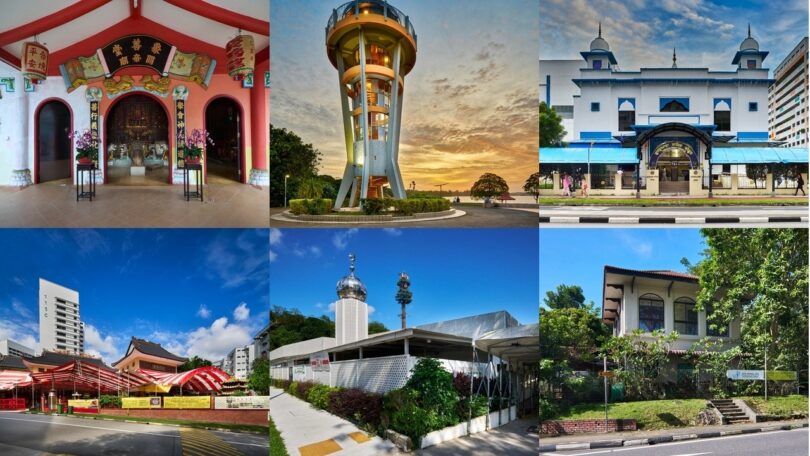

Yishun has become known for the unusual headlines, memes and stories that seem to follow the town. Now, there is another reason to visit.
The refreshed Yishun Heritage Trail reveals a side of the neighbourhood that many Singaporeans may not know. Highlights include the last surviving pre-war building from the former Nee Soon Village, a rocket-shaped viewing tower and a former village once famous for breeding guppies. The trail also features places of worship with histories stretching back decades.
The self-guided trail features 17 sites, eight heritage markers and two suggested routes. Both routes combine walking with public transport. Visitors can choose a shorter one-hour route covering some of the biggest highlights or a longer 2.5-hour journey around Yishun Ring Road.
There Are Two Routes To Choose From
You do not have to visit all 17 sites in one day. The National Heritage Board has created two suggested routes that combine walking and public transport. This makes it easier to explore Yishun at your own pace.
The stated journey times include the use of public transport. Visitors should not expect to walk the full 6km or 7.1km continuously. You can also explore the stops individually instead of completing an entire route in one outing.
Chong Pang City’s Iconic Gateway (Green Route)
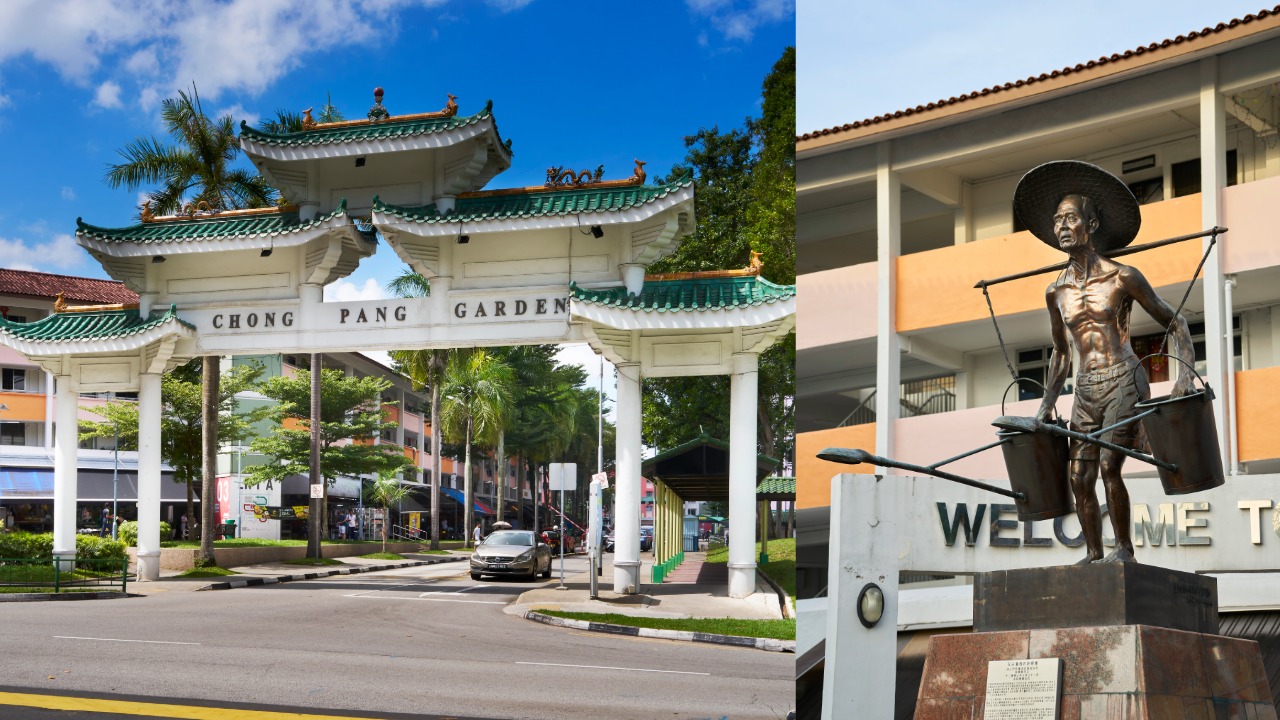
The first thing you will notice at Chong Pang City is its striking Chinese-inspired gateway. However, it was not part of the original neighbourhood. Built between 1976 and 1977, the estate was named after Lim Chong Pang, the second son of pioneering businessman Lim Nee Soon.
After Northpoint opened in 1991, local shopkeepers joined forces to revitalise the area. Their 1993 makeover added the gateway, a landscaped pedestrian mall and other improvements that define Chong Pang City today.
The neighbourhood remains a popular food destination. Long-standing favourites include Chong Pang Nasi Lemak, which traces its roots to the former Chong Pang Village Hawker Centre in 1973.
Images from National Heritage Board
The Mosque & Church That Stood Side By Side For Decades (Green Route)
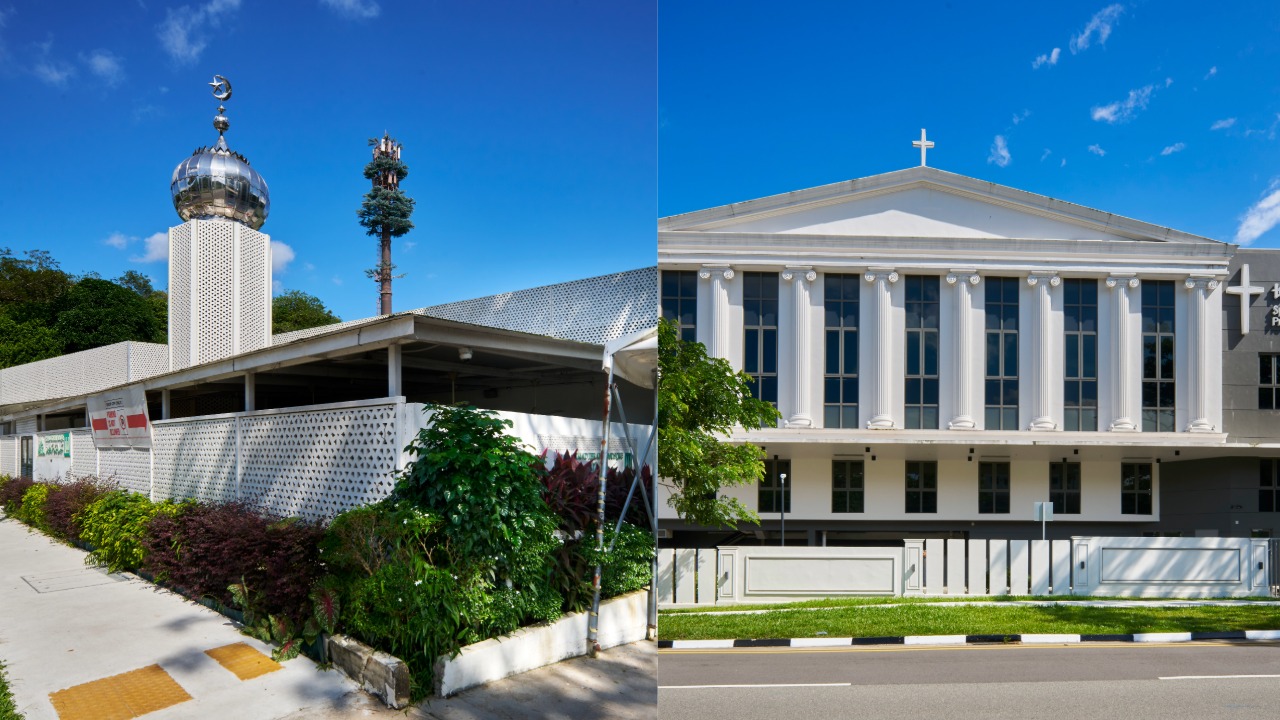
Located a short walk from each other along Jalan Ulu Seletar are Masjid Ahmad Ibrahim and Spiritual Grace Presbyterian Church. The two places of worship have served the former Nee Soon Village community for generations.
Masjid Ahmad Ibrahim began as a small surau built by Muslim residents on land provided by Bukit Sembawang. According to community accounts, the site was chosen after a resident heard a kentong. This traditional slit drum was used to call worshippers to prayer.
The surau later grew into a mosque and school serving residents from Nee Soon, Mandai and nearby military camps.
Spiritual Grace Presbyterian Church was the first church in Nee Soon. It originally stood beside Lim Nee Soon’s rubber factory. In 1924, it moved to its present site on land donated by the pioneering businessman.
Despite belonging to different faiths, the two institutions worked together during busy worship periods and religious festivals. They helped manage traffic and reflected the close-knit spirit of the former village.
Images from National Heritage Board
The Last Surviving Pre-War Building From Old Nee Soon (Green Route)
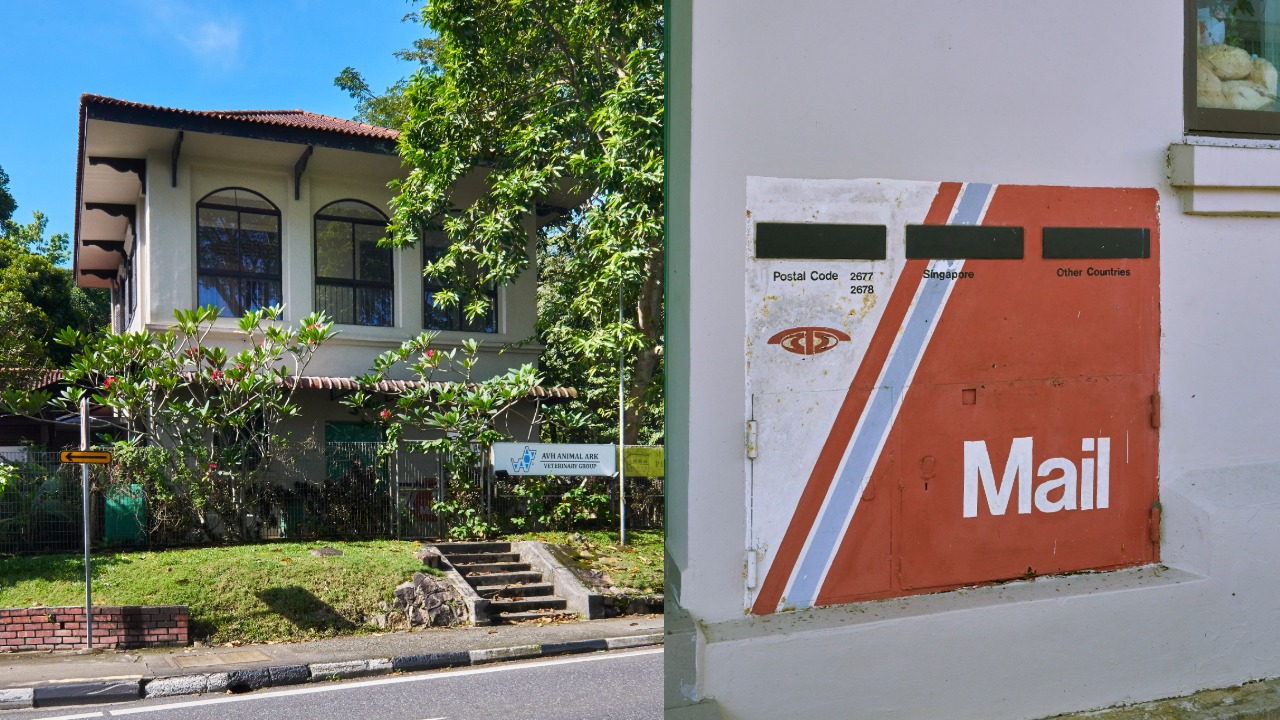
Hidden along Mandai Road is the Former Nee Soon Post Office. It is the last surviving pre-war building from the former Nee Soon Village and one of the main highlights of the refreshed trail.
First established in 1918 and rebuilt in 1939, the two-storey colonial-style building served residents and businesses for decades. It eventually closed in the 1990s.
Today, the building remains a physical reminder of what Old Nee Soon looked like before modern Yishun was developed.
Before you leave, look beside the main entrance for the original wall-embedded letterbox. It still bears the former Telecommunication Authority of Singapore logo and recalls the building’s past as a working post office.
The Former Nee Soon Post Office is located at 5 Mandai Road, Singapore 779391.
Images from National Heritage Board
Why Yishun Has A Rocket-Shaped Tower (Green Route)
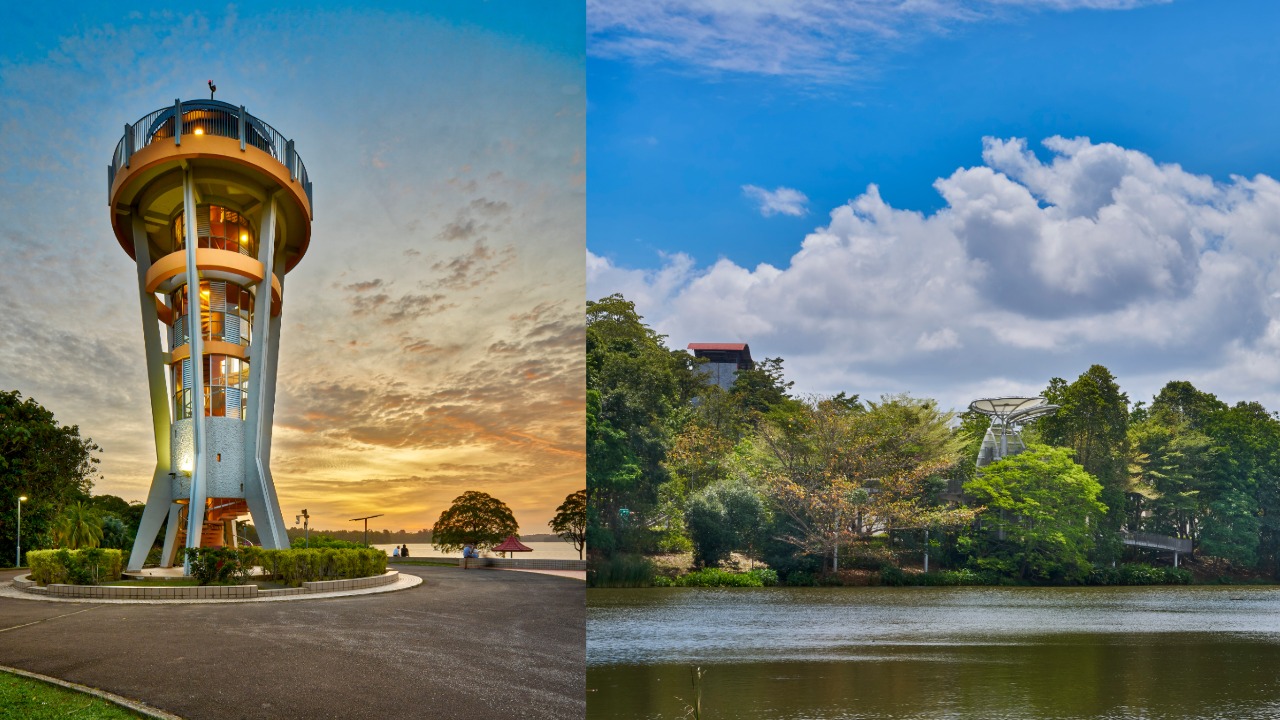
Rising above Upper Seletar Reservoir is the 18-metre-tall Rocket Tower. Its unusual rocket-shaped design was not chosen by chance.
The tower was built during an era of growing excitement about space exploration. It reflects the fascination surrounding humanity’s first moon landing in 1969.
Today, visitors can climb to the top for panoramic views of the reservoir and surrounding greenery.
Images from National Heritage Board
Yishun Was Once Famous For Guppies (Pink Route)
Long before Yishun became an HDB town, the area was home to Chye Kay Village. The rural settlement became one of Singapore’s best-known centres for breeding guppies and tropical fish.
Unlike many kampongs that depended mainly on farming, villagers bred ornamental fish as another source of income. They used rows of breeding ponds to raise different varieties. This helped Chye Kay Village become closely linked to Singapore’s growing tropical fish trade.
One of the village’s best-known residents was Tan Tuan Kion, the principal of Lee Cheng School. He pioneered guppy breeding in the area and developed new varieties. They were admired for their vibrant colours and distinctive patterns.
The village has since disappeared, but visitors can discover this forgotten chapter at the Chye Kay Village Heritage Garden.
The Pink Route also passes Yishun Park, which occupies part of the former village area. Traces of its plantations can still be found among the greenery, including mature fruit and rubber trees.
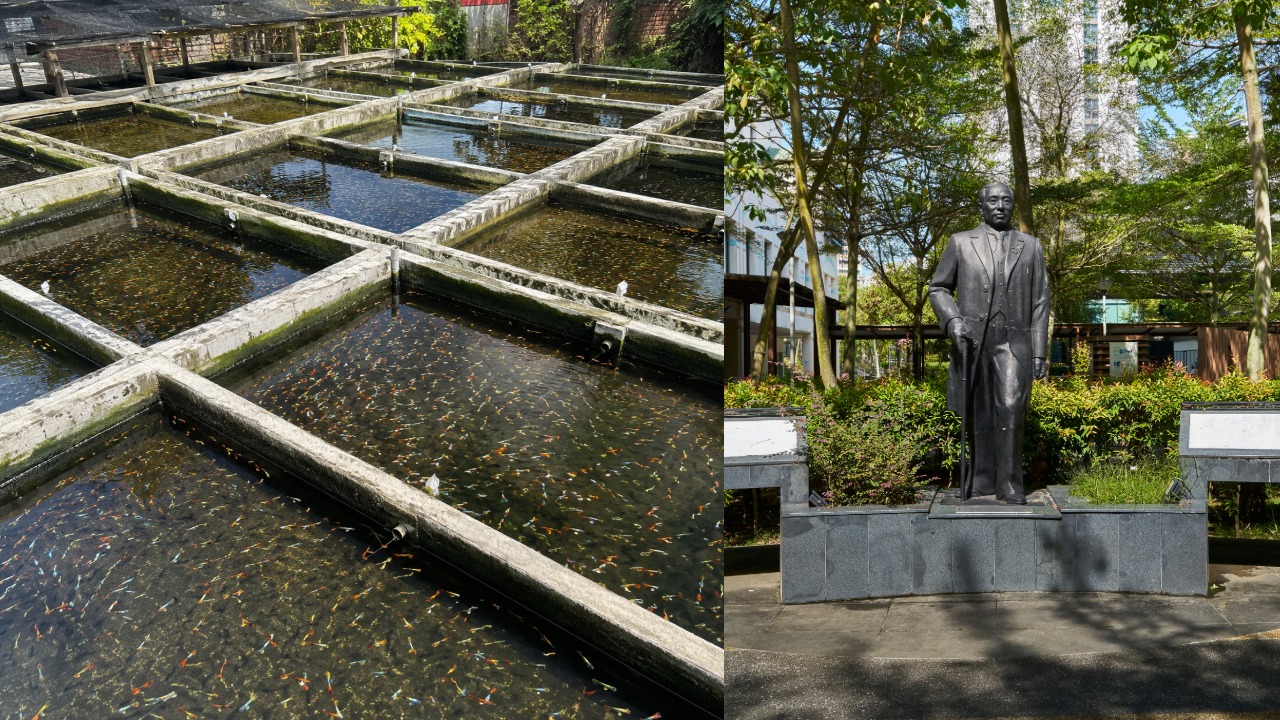
Image on the left reimagined by an artist. Image on the right from National Heritage Board.
This Temple Changed From Pink To Gold (Pink Route)
Sree Maha Mariamman Temple was predominantly pink when it opened at its present site in 1996. A major refurbishment in 2010 transformed it into the gold-coloured landmark seen today.
The temple has also relocated several times as northern Singapore evolved. Its history dates back to the 1930s, when devotees worshipped a timber statue of Sree Maha Mariamman at a shrine along Sembawang Road.
As nearby villages gave way to redevelopment, the temple moved several times. It eventually settled at Yishun Avenue 3.
While visiting, take time to admire its colourful towers, intricate carvings and deity sculptures. Visitors should dress modestly and remove their footwear before entering.
The temple is generally open daily from 6am to 12pm and from 6pm to 9pm. On Tuesdays and Fridays, evening services begin at 5.30pm.
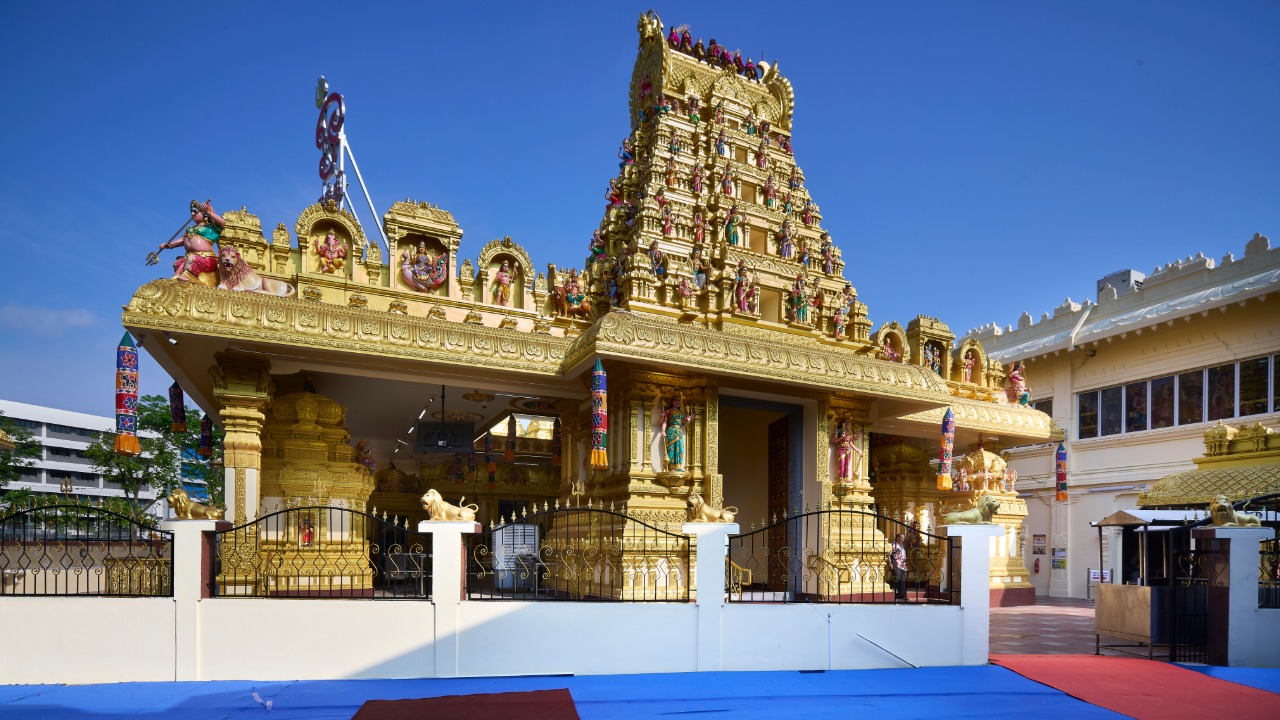
Image from National Heritage Board
Why This Church Looks Like A Ship (Pink Route)
The Church of Our Lady Star of the Sea features a ship-inspired design. Its architecture pays tribute to the church’s early connections with the former British Naval Base in Sembawang.
Catholic priests began serving the growing community around the naval base in 1926. Services were initially held in a makeshift building and later at the original Naval Base School.
The parish was formally established in 1949 to serve naval base workers and residents living nearby. A dedicated church later opened at Jalan Sendudok in 1953.
Government land acquisition and the area’s growing population eventually led the church to relocate. Its present building at Yishun Street 22 officially opened in 1992.
Look out for architectural elements that resemble the bow of a ship. They offer a subtle reminder of the church’s maritime past.
The name “Star of the Sea” is a traditional title associated with the Virgin Mary and her role as a guide and protector of seafarers.
As this remains an active place of worship, visitors should dress respectfully and keep noise to a minimum.
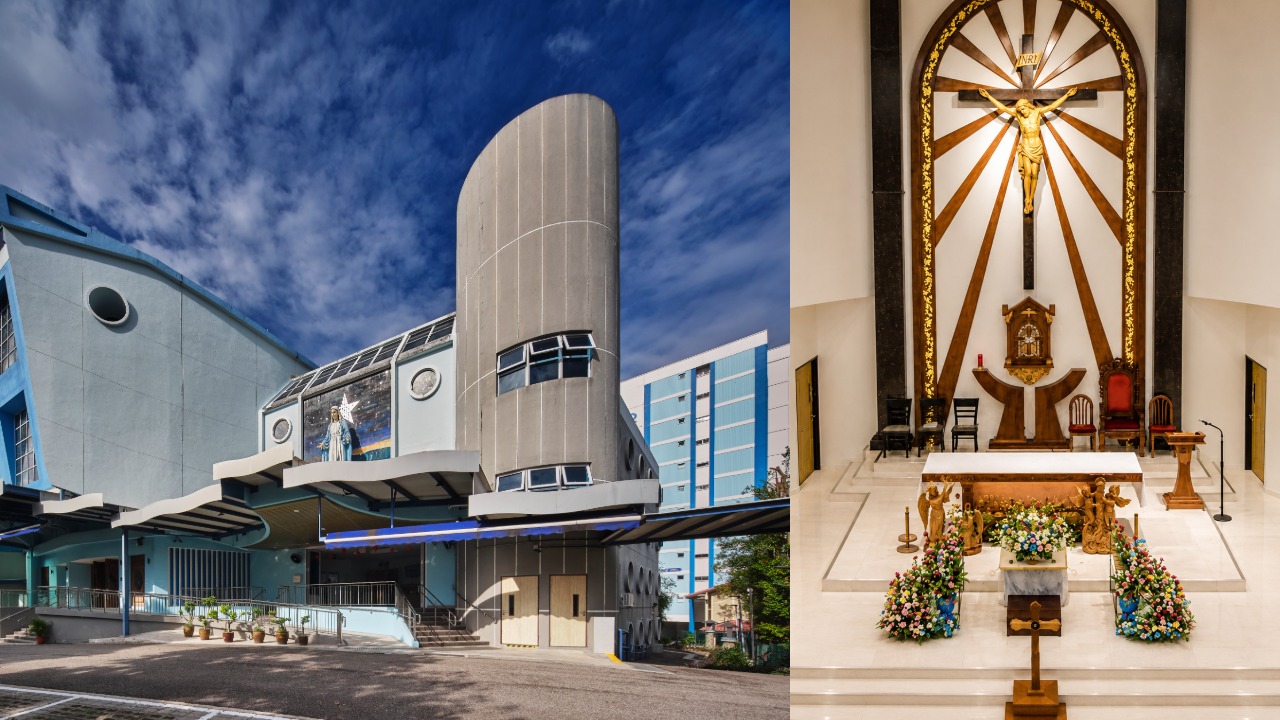
Image on the right from National Heritage Board