
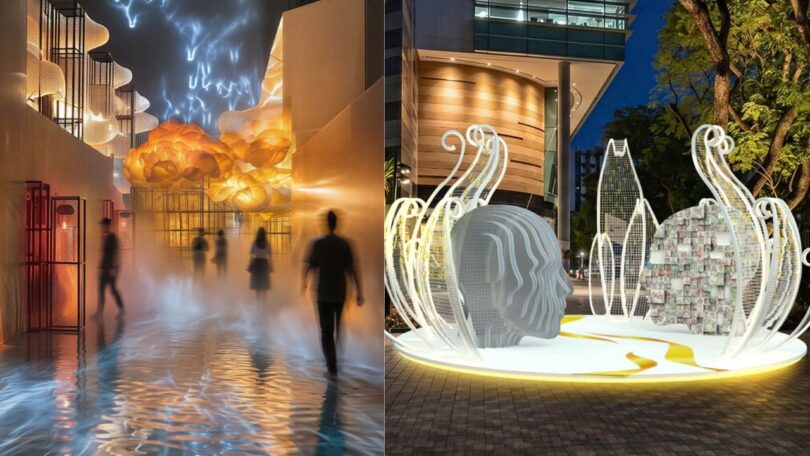

Ancient spirits, mysterious shrines and giant glowing creatures will take over Bras Basah and Bugis when Singapore Night Festival 2026 returns from 21 August to 5 September.
Built around the theme of Myths and Legends, this year’s edition dives into the supernatural side of Singapore and Southeast Asia. Familiar landmarks will become settings for eerie folklore, age old superstitions and stories that have survived across generations. Instead of simply lighting up buildings, the festival uses projection mapping, live theatre, sound and interactive art to make these tales feel present again.
The 17th edition will unfold across the Bras Basah and Bugis precinct over three weekends. Most installations are free, although selected programmes and immersive experiences require tickets.
Enter Fort Canning’s Forbidden Hill after dark
If there is one experience that feels unlike a typical festival attraction, it is The Lost Legacy of Fort Canning: The Forbidden Hill. Instead of following a guide between historical markers, visitors embark on a 70 minute nocturnal journey through Bukit Larangan, where atmospheric soundscapes, traditional Malay dance and physical performance blur the line between history and legend.
Inspired by 14th century Singapura, the experience explores tales of buried gold, an ancient freshwater spring and a mysterious sacred shrine whose true identity remains unknown. The result is less like a conventional heritage tour and more like stepping into an unresolved historical mystery.
The outdoor experience runs on selected dates, with sessions from 8pm to 9.10pm and 10pm to 11.10pm. Tickets cost S$60.
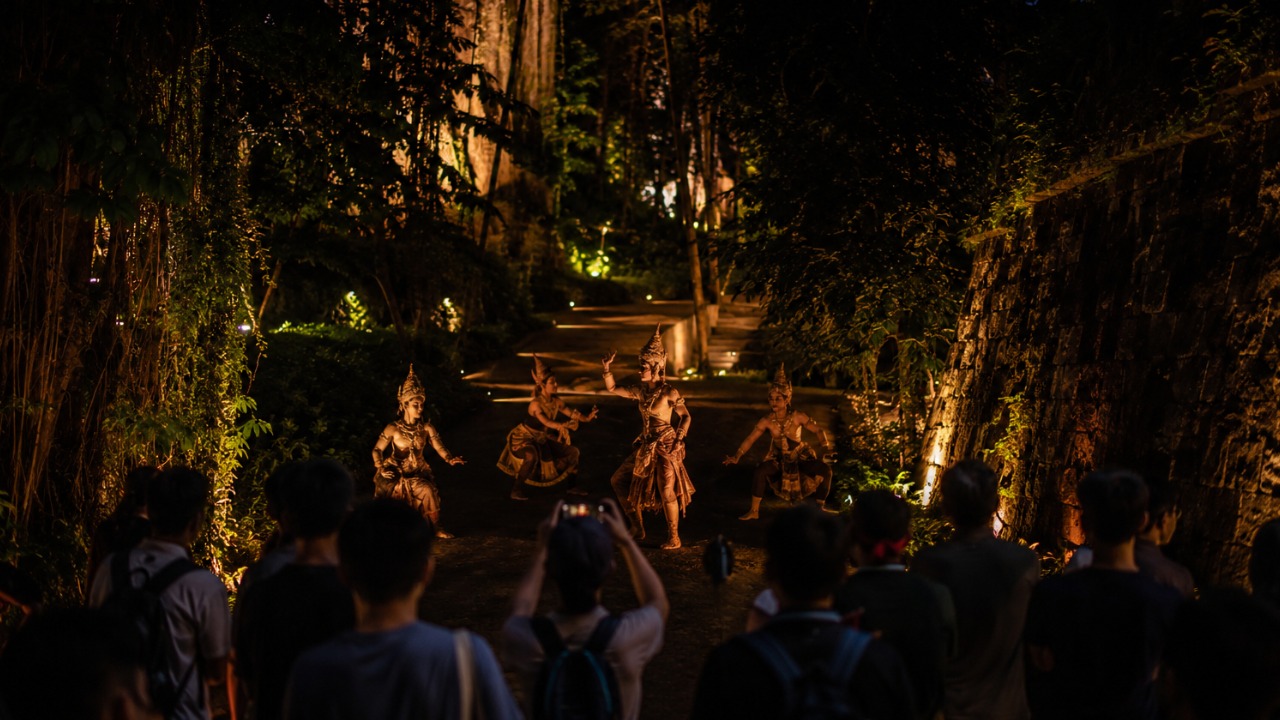
Artist impression of The Lost Legacy of Fort Canning: The Forbidden Hill
The National Museum becomes a mythical canvas
The National Museum of Singapore will also become one of the festival’s most prominent storytelling spaces with Tales of Earth and Sea. Created by Indonesian multimedia artist team The Fox, The Folks, the large scale projection reimagines folklore through the relationship between land and water.
Rather than presenting legends as stories trapped in the past, the artwork treats them as living ideas that communities continue to reshape. An original soundtrack by Singapore music collective Artusik and UiTM Malaysia adds another regional layer to the experience.
The projection will begin at 8pm during the festival launch on 21 August. On the same evening, the museum grounds will also welcome the festival’s giant glowing Birdmen.
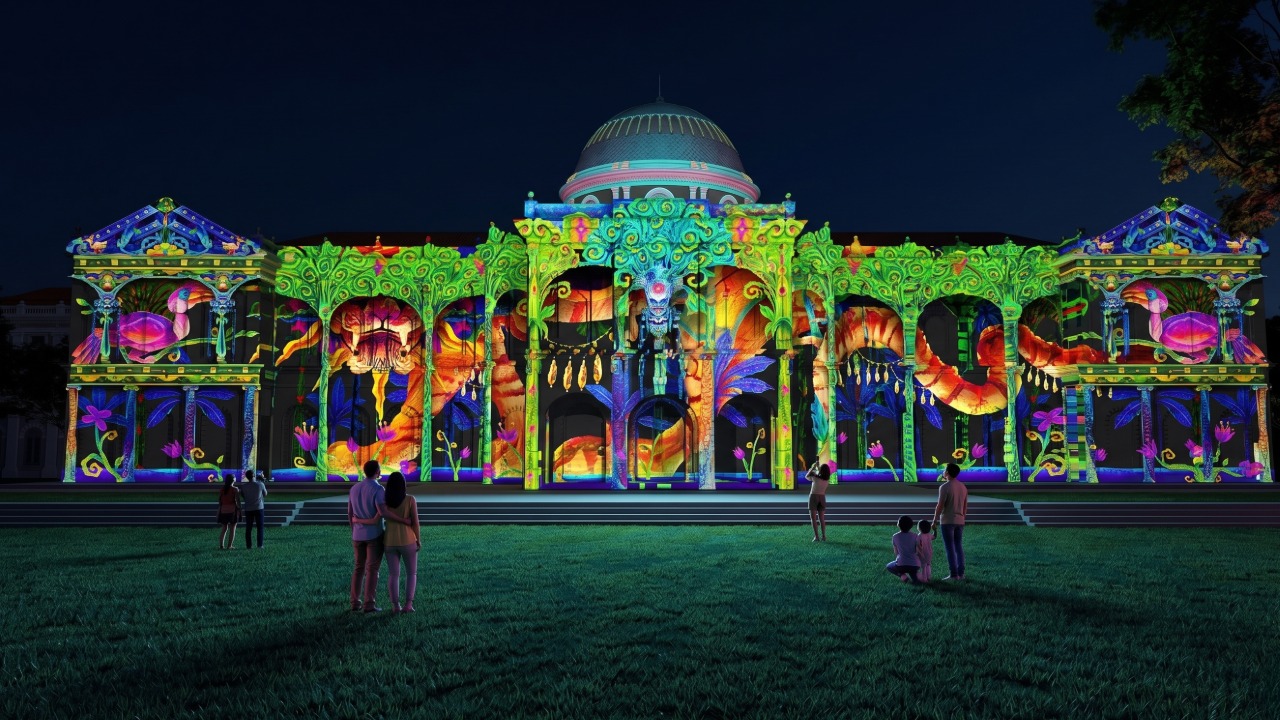
Tales of Earth and Sea at the National Museum of Singapore
Giant glowing Birdmen will roam the streets
Keep an eye on the skyline during the opening weekend because enormous illuminated creatures will move through the festival crowds. Created by Dutch outdoor theatre company Close Act, Birdmen features mysterious pterodactyl like animals operated by performers on stilts.
The production imagines the creatures as beings from another dimension that appear unaware of the humans beneath them. Their arrival turns an ordinary walk between festival locations into something closer to a supernatural encounter.
Making its Southeast Asian debut, Birdmen will appear at the National Museum of Singapore, SMU Campus Green and Armenian Street from 21 to 23 August. Two 45 minute sessions will take place between 7.30pm and 11pm.
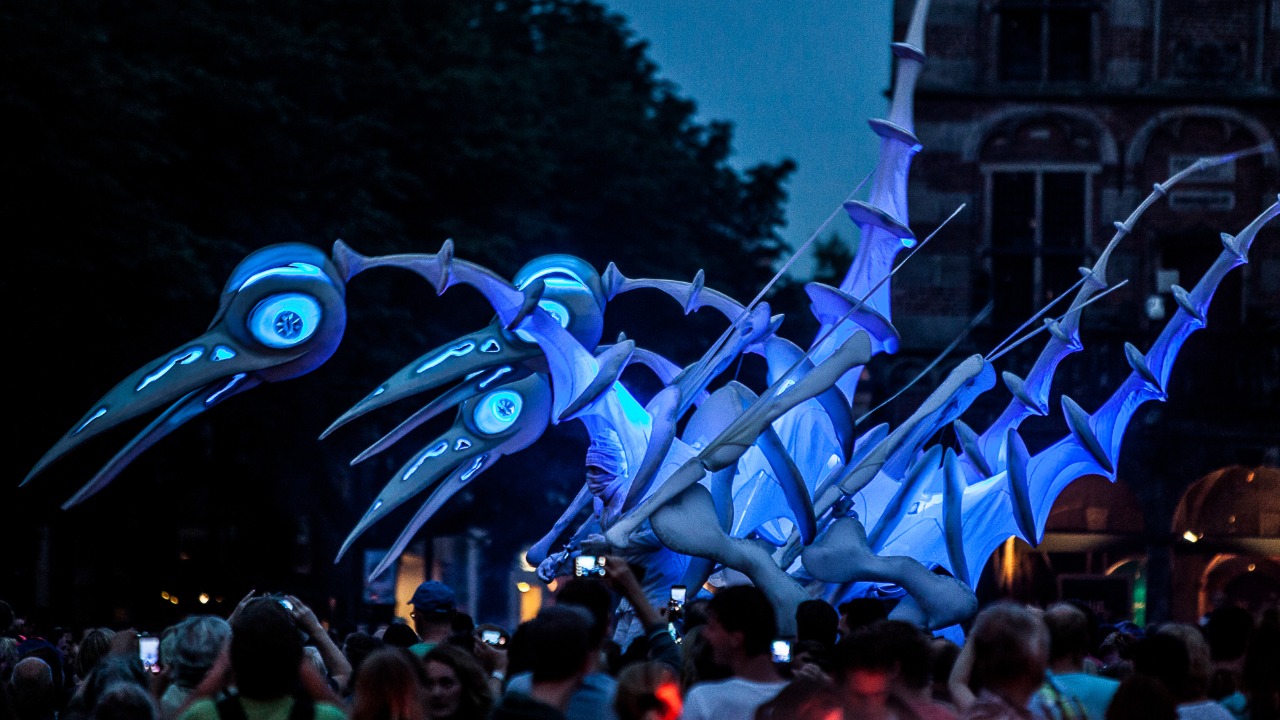
Birdmen will roam across several festival locations during the opening weekend
Step inside the legend of the Dragon’s Teeth Gate
Before Singapore became a modern port city, sailors approaching its waters encountered a rocky maritime gateway known as Long Ya Men, or the Dragon’s Teeth Gate. That lost landmark provides the inspiration for The Dragon’s Tooth: A Legend of Becoming Light at SMU Campus Green.
The installation transforms the legend into a luminous bamboo sanctuary built around a guardian relic said to contain the memories of ancient seafaring protectors. As visitors move through the structure, shifting light and shadow create the feeling of entering a living myth rather than viewing a static sculpture.
The work connects Singapore’s early coastal geography with ideas of courage, memory and spiritual protection. Admission is free throughout the festival.
Artist impression of The Dragon’s Tooth: A Legend of Becoming Light
Brave supernatural storms at Bugis Street
Bugis Street Art Lane also will become a passage through turbulent waters in Stormy Straits. Created by the Melting Po(r)t Collective, the installation draws visitors into the myths and forgotten maritime tales of the surrounding archipelago.
Visitors will navigate simulated monsoon conditions and search for shelter near glowing lighthouses. Along the way, the alleyways reveal stories of dangerous crossings, uncertain voyages and the supernatural beliefs that once accompanied sailors travelling through the region.
Classic Southeast Asian horror returns to Oldham Theatre
The supernatural theme continues indoors at the National Archives of Singapore. Presented by the Asian Film Archive, Horror Nights @ Oldham Theatre revisits the creatures, curses and anxieties that shaped classic Singaporean and regional horror cinema.
The programme includes screenings of Orang Minyak, Tiger Stripes and Roh. A supporting showcase will reveal behind the scenes stories, while a panel discussion traces how Southeast Asian horror has evolved across generations.
Audience members are encouraged to arrive in horror or fantasy costumes. The programme runs on 22, 23, 29 and 30 August from 7.30pm to 9pm. Tickets cost S$10.
Local superstitions become tongue in cheek artworks
Some of the most relatable stories at the festival may be the ones Singaporeans heard at home. The inaugural Light Together Bras Basah.Bugis programme will present four installations inspired by colloquial myths and everyday superstitions.
Instead of treating these beliefs with solemnity, the artists approach them with humour. Expect playful references to warnings about unlucky actions, unexplained consequences and the familiar advice that often begins with, “My grandmother said…”
By turning private family beliefs into public artworks, the programme highlights how superstitions remain part of Singapore’s shared cultural language, even among people who insist they do not believe in them.